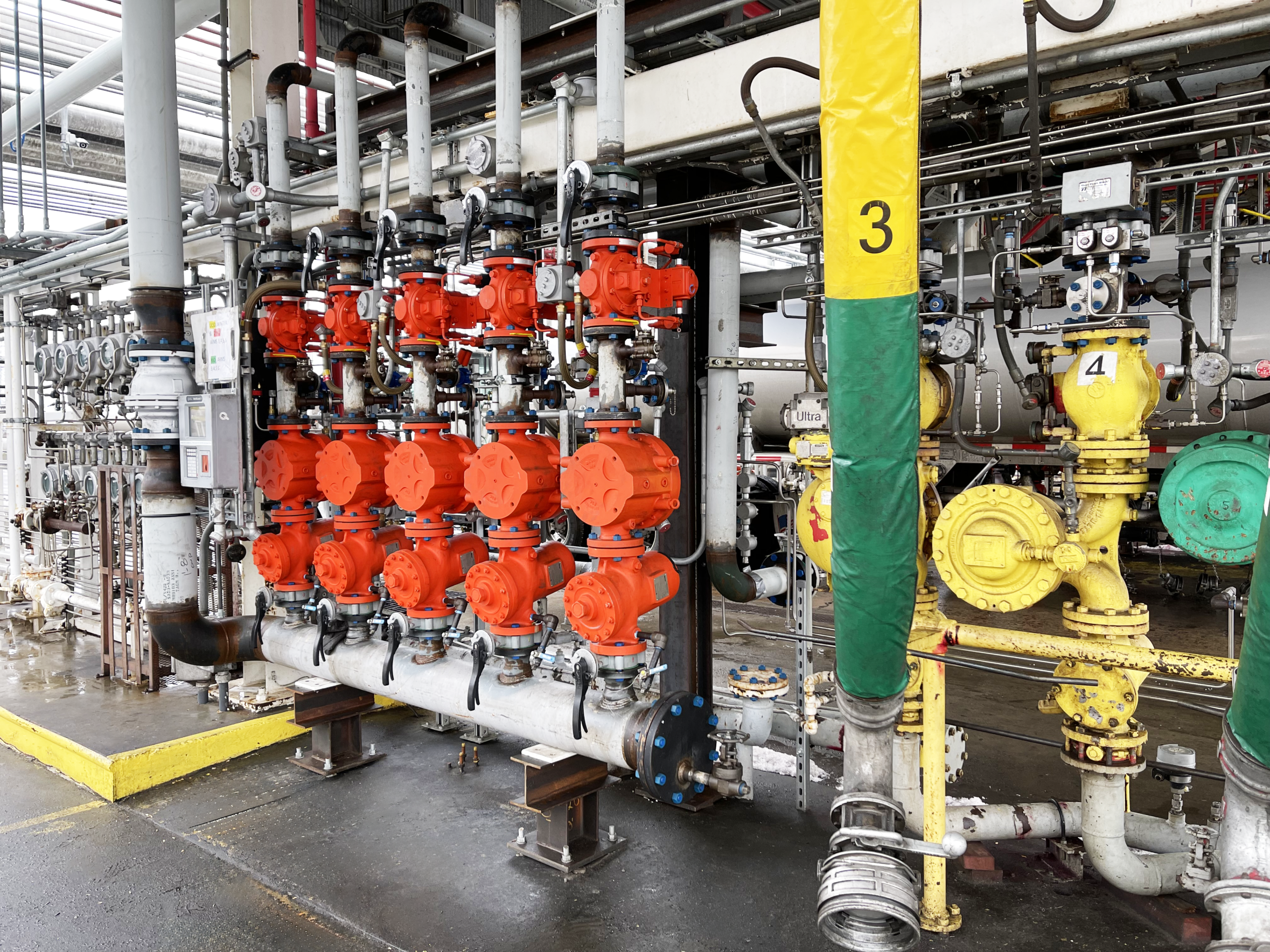
Process piping is the network of pipes, fittings, valves, and supports that carries the liquids, gases, slurries, and chemicals used directly in manufacturing, from raw materials and process fluids to fuels and finished product. Unlike plumbing or building utility systems, it is engineered around the process itself, including its pressures, temperatures, and chemical properties. In the United States, most process piping is designed, fabricated, and tested to the ASME B31.3 Process Piping Code. Manufacturers need to understand it because material selection, weld quality, layout, and testing directly affect safety, uptime, product quality, and regulatory compliance.
For Massachusetts manufacturers, piping often gets attention only after a leak, failed inspection, or shutdown. This guide covers how it works, which materials matter, the practices that prevent problems, and the standards that govern it.
Process Piping Definition and Applications
Process piping moves fluids within a plant as part of the production cycle. It carries raw materials to reactors and mixing tanks, moves chemicals through treatment stages, and delivers cooling water, steam, or compressed air to equipment. Each system faces its own temperatures, pressures, and chemical exposure, so pipe, fittings, and valves must be selected for those conditions. The wrong material or poor design can lead to contamination, downtime, or a dangerous failure.
Example Applications
Chemical manufacturers move corrosive acids and solvents, often under pressure, which calls for stainless steel, resistant alloys, or lined pipe. Petroleum, fuel, and natural gas systems typically rely on welded carbon steel. Food, beverage, and pharmaceutical plants use sanitary stainless steel designed for cleanability, where every weld, valve, and slope supports strict hygiene standards. In each case, material choice affects compliance and service life, not just function.
Key Components and Materials
Stainless steel grades such as 304 and 316L resist corrosion across a wide temperature range, making them common for aggressive chemicals and sanitary lines. Carbon steel offers strength at lower cost and is standard for steam, compressed air, cooling water, fuel, and natural gas. Thermoplastics such as PVC and CPVC suit lower-pressure, lower-temperature service, including many corrosive chemicals they resist better than metal.
Valves regulate flow and isolate equipment. Butterfly valves are compact and common for on-off and basic flow control, ball valves provide tight shutoff, and diaphragm valves suit throttling and sanitary service. Pumps must match fluid type, viscosity, and flow, since a poorly sized pump wastes energy and wears out early.
| Component | Function | Typical Use |
| Valves | Regulate flow and pressure | Isolation, on-off control, throttling |
| Pumps | Move fluid and build pressure | Circulation and transfer between vessels |
| Meters | Measure flow rate or volume | Process control and compliance reporting |
| Fittings | Connect pipe sections | Changing direction or diameter |
| Gaskets | Seal flanged joints | Preventing leaks under pressure |
Compatibility ties it together. A gasket not rated for the fluid or temperature can degrade and leak, and poor stainless steel welds create weak points prone to corrosion and cracking.
Utility Piping Considerations
Utility piping supports the process rather than carrying product, but it is just as critical to uptime. Insulation reduces energy loss and protects workers from burns on hot lines, and valves and gauges need clear access for service. Our process and utility piping work covers natural gas and utility piping, chemical and process piping, petroleum and LNG systems, and the structural supports that hold them.
Design Requirements and Considerations
Every pipe run, valve position, and weld affects efficiency, safety, and maintainability. Material choices should weigh service life against maintenance; coated carbon steel, for example, can be cost-effective where corrosion is less aggressive.
A dead leg is any pipe section where fluid sits without flow. In food and pharmaceutical systems, these pockets can harbor bacteria; in chemical plants, they invite corrosion and residue buildup. Designers minimize them with loops instead of stub-outs and short branch connections, which also supports Clean-In-Place (CIP) cleaning.
Lines that must drain completely need a consistent slope toward drain points. The gradient varies by fluid and standard, with hygienic systems built to ASME BPE following specified minimum slopes. Valves should be easy to reach and never create isolated pockets, and gaskets should match each line’s chemicals and temperatures. These choices help a system meet ASME B31.3 and, where applicable, FDA and ASME BPE requirements while avoiding costly rework.
Installation Best Practices
Precision welding is the foundation of a reliable system. Weld quality determines joint strength and leak-tightness, so welders should be qualified to written procedures under ASME Section IX, using the right process for the material, such as GTAW or SMAW. Our certified welders hold ASME IX and API 1104 qualifications.
Correct pipe support prevents sagging, which strains joints and welds over long runs. Support spacing depends on pipe size, material, contents, and the governing code, and MSS SP-58 is widely used for hanger and support design. Well-planned supports also absorb vibration and accommodate thermal expansion.
Pressure testing confirms the work before startup. Under ASME B31.3, a hydrostatic leak test is performed at no less than 1.5 times design pressure, adjusted for temperature where required, and held at least 10 minutes before joints are examined. Many specifications require longer holds, and results should be documented.
Shop prefabrication can improve all three. We build skids, modular piping, and assemblies in our in-house prefabrication shop, where a controlled environment supports better quality control, less field labor, faster project timelines, and safer installation.
Maintenance and Safety Guidelines
Corrosion, leaks, and wear develop gradually, especially with aggressive chemicals or cycling pressures and temperatures. Routine inspections should focus on welds, joints, and bends where stress concentrates, looking for discoloration, pitting, or moisture that signals a leak. Detailed inspection and repair records document the system’s condition and support regulatory requirements.
Maintenance Tips
A practical program pairs monthly visual inspections with an annual review that includes nondestructive testing where appropriate. Replace gaskets on a schedule instead of waiting for leaks, track corrosion rates on corrosive lines and adjust intervals to match, and keep isolation points accessible so crews can service sections without unplanned shutdowns.
Safety Protocols
Piping maintenance often means working around hazardous substances and stored energy. Staff should be trained in lockout/tagout under OSHA 1910.147 so equipment is isolated before work begins. OSHA also requires employers to assess hazards and provide appropriate PPE, including eye protection meeting ANSI/ISEA Z87.1 and respiratory protection where chemical exposure is possible. Emergency procedures for leaks or ruptures should be known to all personnel and reviewed as codes change.
Regulatory Standards and Compliance
The primary standard for process piping is the ASME B31.3 Process Piping Code, which sets requirements for materials, design, fabrication, assembly, examination, inspection, and testing. Welding procedures and welder qualifications fall under ASME Section IX, which helps ensure joints are made consistently and can withstand operating stresses.
API 570 governs inspection of in-service piping, particularly in refining and chemical processing, and sets maximum intervals by piping class: at least every five years for the highest-consequence lines, extending to ten years for lower-risk classes. OSHA’s Process Safety Management standard, 29 CFR 1910.119, applies to processes involving highly hazardous chemicals above threshold quantities, and its mechanical integrity requirements specifically include piping systems. In Massachusetts, piping work also falls under state trade licensing, and we hold Massachusetts and Rhode Island trade licenses.
Documentation often separates a smooth audit from a delayed startup. Material certificates, welding records, examination reports, and pressure test results should be complete and traceable to each component.
Benefits for Manufacturers
A well-designed, well-maintained system supports product quality, reduces unplanned downtime, and keeps facilities inspection-ready. The right materials and qualified installation cost more up front than the cheapest option, but they reduce maintenance and turn emergency repairs into planned work.
Poor design risks contamination or inconsistent flow that affects output quality. For manufacturers under FDA requirements or OSHA process safety rules, a system built and documented to code reduces the risk of fines, recalls, and shutdowns. And because process piping connects to boilers, HVAC, and controls, one multi-trade contractor means fewer handoffs and faster coordination.
Frequently Asked Questions
What is process piping?
Process piping is the system of pipes, fittings, valves, and supports that carries fluids used in manufacturing, such as chemicals, fuels, gases, and product ingredients, engineered for a specific process.
What is the difference between process piping and plumbing?
Plumbing supplies potable water and removes waste in buildings under plumbing codes. Process piping carries the materials and fluids used in production and is typically built to ASME B31.3, with stricter requirements for materials, welding, examination, and testing.
What code governs process piping in the United States?
Most process piping is designed, fabricated, and tested to ASME B31.3. Welding is qualified under ASME Section IX, and in-service inspection often follows API 570. Facilities handling highly hazardous chemicals may also fall under OSHA 1910.119.
What materials are used for process piping?
Common materials include stainless steel (such as 304 and 316L) for corrosive and sanitary service, carbon steel for steam, compressed air, fuel, and natural gas, and thermoplastics such as PVC and CPVC for lower-pressure chemical service. The right choice depends on the fluid, pressure, and temperature.
How is process piping tested before startup?
Under ASME B31.3, systems typically receive a hydrostatic leak test at no less than 1.5 times design pressure, held for at least 10 minutes before joints are examined. A pneumatic test may be used when water cannot be introduced, with added safety precautions.
How often should process piping be inspected?
API 570 sets maximum intervals by piping class, from five years for the highest-consequence lines to ten for lower-risk lines. Many facilities add monthly visual checks and annual reviews.
Does Fraser Engineering Co. Inc. install process piping in Massachusetts?
Yes. We install natural gas and utility piping, chemical and process piping, petroleum and LNG systems, and structural supports and modular systems for industrial and commercial facilities across Massachusetts, using ASME IX and API 1104 certified welders and our in-house prefabrication shop.
Plan Your Next Process Piping Project with Fraser Engineering Co. Inc.
Whether you are adding a production line, replacing aging pipe, or preparing for an inspection, installation quality determines how reliably your system performs. For more than 75 years, Fraser Engineering Co. Inc. has served Massachusetts facilities, and today we support manufacturers, gas utilities, and petroleum terminals with certified welders, experienced pipefitters, and in-house prefabrication. As a third-generation, certified women-owned company with Massachusetts and Rhode Island trade licenses and a National Board R Stamp, we bring piping, HVAC, plumbing, and controls under one roof with one point of accountability.
Call 617-332-37000, or contact our team to discuss your process piping project. You can also download our Process & Utility Piping Capability Statement from our Process & Utility Piping page.
Note: Massachusetts regulations require mechanical contractors to hold valid licenses on all trades they offer.