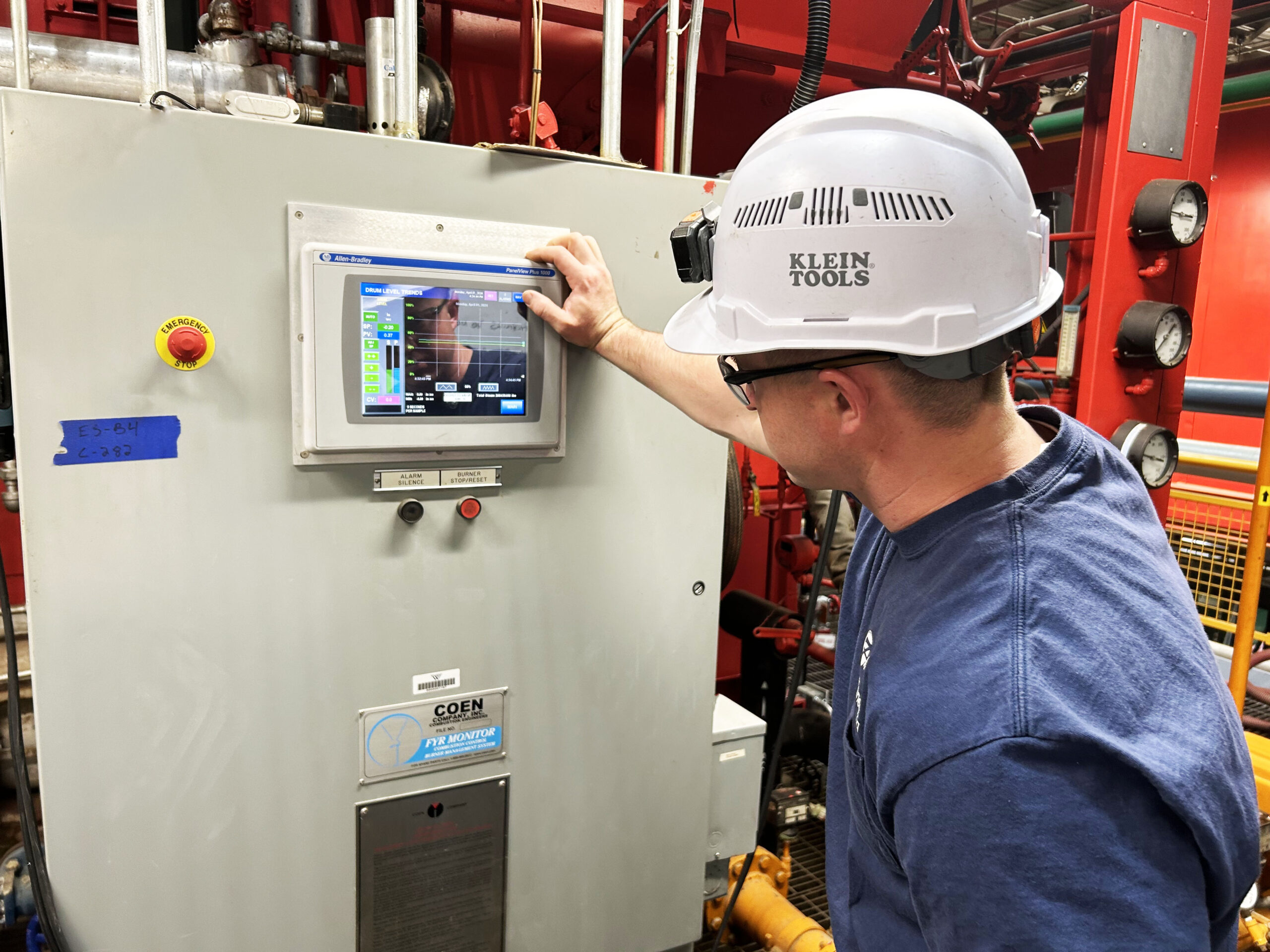
A commercial HVAC maintenance checklist is a schedule of inspection, cleaning, testing, and service tasks that keeps heating, cooling, and ventilation equipment running reliably. The core items are daily visual and sound checks, weekly controls monitoring, filter replacement every one to three months, monthly condensate drain care, quarterly coil, refrigerant, and electrical checks, and professional service at least twice a year, including a full annual inspection with combustion analysis and safety control testing. Following this schedule catches problems early, lowers energy use, extends equipment life, and prevents unplanned shutdowns.
For facility managers at manufacturing plants, hospitals, commercial buildings, and institutional campuses across Massachusetts, an HVAC failure can stop production, disrupt patient and tenant comfort, and lead to costly emergency repairs. Below, we cover what to check, how often, and where professional support fits, so maintenance becomes a predictable process instead of a reactive one.
Commercial HVAC Maintenance Checklist by Frequency
Daily and Weekly Checks
Daily walkthroughs take minutes but often give the first warning of trouble. Staff should listen for unusual noises, look for water around air handlers and rooftop units, note abnormal vibration, and compare temperature and pressure readings to normal ranges. Squealing, grinding, or rattling often points to worn belts, failing bearings, or loose parts in motors and pumps.
Weekly checks go further. Confirm that thermostats and building controls hold setpoints, review equipment cycling, and inspect belts and motors for wear. A sensor reading even a couple of degrees off can cause short cycling, adding wear and energy cost before anyone notices a comfort problem.
Monthly Filter and Drain Care
Filters are the simplest task on the list and one of the most important. The U.S. Department of Energy notes that replacing a dirty, clogged filter can lower an air conditioner’s energy use by 5% to 15%. Most commercial systems need new filters every one to three months, while hospitals, manufacturing floors, and other dusty or high-occupancy spaces often need monthly changes. Many facilities use MERV 8 to MERV 13 filters, but the right rating depends on equipment design, since a higher-rated filter can restrict airflow on units not built for it.
Monthly rounds should also include clearing condensate drain pans and lines and inspecting visible refrigerant lines for oil residue, corrosion, or damaged insulation.
Quarterly Performance Checks
Every three months, technicians should clean condenser and evaporator coils, check refrigerant pressures, tighten electrical connections, and confirm that controls respond correctly during startup and shutdown. Dirty coils reduce heat transfer and force compressors to work harder, while loose connections can lead to arcing and component failure.
Semiannual and Annual Professional Service
At least twice a year, typically in spring before cooling season and fall before heating season, licensed technicians should service compressors, blower assemblies, and safety controls and lubricate motors and bearings where required. The annual inspection is the most thorough visit. It covers airflow balancing, sensor and thermostat calibration, heat exchanger and ductwork inspection, relief valve testing, and combustion analysis on boilers, burners, and gas-fired units to confirm safe carbon monoxide levels and efficient operation.
Commercial HVAC Maintenance Checklist at a Glance
| Task | Frequency | Purpose |
| Visual and sound walkthrough | Daily | Catch leaks, noise, and vibration early |
| Controls and setpoint review | Weekly | Prevent short cycling and energy waste |
| Filter replacement | Every 1 to 3 months | Protect airflow and indoor air quality |
| Condensate drain and line cleaning | Monthly | Prevent leaks, water damage, and mold |
| Coil cleaning, refrigerant, and electrical checks | Quarterly | Maintain efficiency and prevent faults |
| Blower, motor, and safety control service | Twice a year | Reduce wear before peak seasons |
| Combustion analysis, calibration, and safety inspection | Annually | Confirm safe, efficient operation |
Scheduled Inspections and Seasonal Routine Checks
Massachusetts facilities face humid summers that push cooling equipment hard and long winters that depend on boilers and burners running without interruption. Mild shoulder seasons can hide worn electrical connections, dirty filters, or failing parts, so we recommend pre-season inspections in spring and fall, before equipment takes on its heaviest load.
Detailed service records make each inspection more valuable. Documented visits reveal patterns of wear and recurring faults, helping facility teams plan repairs and budget for replacements before an emergency call forces the issue.
Why HVAC System Cleaning Matters
Cleaning is one of the most direct ways to control operating costs. According to the Department of Energy’s Federal Energy Management Program, operations and maintenance programs focused on energy efficiency are estimated to save 5% to 20% on energy bills without significant capital investment.
Air ducts collect dust, debris, and sometimes mold, restricting airflow and lowering indoor air quality. Dirty condenser and evaporator coils reduce heat transfer, so compressors run longer and wear faster. Clogged drain pans and condensate lines cause water to back up and damage ceilings, floors, and equipment below. For facilities with multiple rooftop units or VRF systems, pairing cleaning with functional testing at each service visit keeps small issues from becoming expensive repairs.
Detailed HVAC Components Checklist
Thermostats and controls act as the brain of the operation. Regular testing keeps zone temperatures accurate and prevents energy spikes from faulty sensors or outdated programming. Facilities with building automation or custom industrial controls benefit from periodic calibration so sequences run as designed.
Refrigerant levels should be checked quarterly. Low refrigerant reduces cooling capacity and strains the compressor, one of the most expensive components to replace.
Blower assemblies should be cleaned and inspected twice a year, since dirt and dried lubricant cause noise, overheating, and misalignment. Lubricating bearings and tightening connections here prevents larger failures.
Heat exchangers and relief valves need annual safety inspections. A cracked heat exchanger can allow combustion gases into occupied spaces, and relief valves must open properly to keep system pressure within safe limits.
Ductwork should be inspected annually for leaks, blockages, and contamination that reduce airflow and carry pollutants into the workspace.
The Role of Professional Technicians
In-house teams handle daily observation well, but systems with chillers, cooling towers, boilers, VRF units, and integrated controls need licensed trades to diagnose and service them. Trained technicians measure airflow, test electrical components under load, analyze combustion, and calibrate sensors tied to automated controls, catching small refrigerant leaks or early motor wear before they cause an emergency shutdown.
This is where a multi-trade partner simplifies the work. Our licensed workforce includes plumbers, HVAC technicians, welders, pipefitters, electricians, and burner technicians, so one team can handle the equipment, the piping that serves it, and the controls that run it. Our preventative maintenance programs are customized to each facility and designed to identify issues before they become failures.
How to Build a Commercial HVAC Maintenance Schedule
A strong schedule starts with how your building operates. A plant running around the clock, a hospital with strict air quality needs, and an office with changing occupancy each need different maintenance rhythms. List every piece of equipment with its age, runtime, and the manufacturer’s recommended service intervals, then assign each task a frequency and an owner, either in-house staff or your service contractor.
A Computerized Maintenance Management System (CMMS) can automate reminders, log completed work, and build the service history needed for budgeting and capital planning. Align major service visits with the spring and fall transitions, and keep in-house tasks like filter checks consistent between visits.
Preventing System Failures Through Proactive Maintenance
HVAC components do not wear evenly. Motors and compressors carry the most strain, and dirt or missed lubrication speeds their decline. Electrical connections loosen with vibration and temperature swings, so regular tightening and testing prevents arcing and unexpected shutdowns.
Refrigerant rules raise the stakes. Under the EPA’s AIM Act, most new comfort cooling equipment must use lower-GWP refrigerants, and production of HFCs such as R-410A continues to be phased down. Existing R-410A equipment can still be serviced, and keeping it leak-free helps facilities control costs and plan system upgrades and replacements on their own timeline instead of after a failure.
Smart sensors and remote monitoring can flag unusual vibration or temperature changes in real time, but they work best alongside consistent, hands-on maintenance.
Frequently Asked Questions
What should a commercial HVAC maintenance checklist include?
A complete checklist covers daily walkthroughs, weekly controls review, filter changes every one to three months, monthly drain cleaning, quarterly coil, refrigerant, and electrical checks, semiannual professional service, and an annual inspection with combustion analysis and safety testing.
How often should a commercial HVAC system be professionally serviced?
Most commercial systems need professional service at least twice a year, in spring and fall, with in-house checks in between. Facilities running equipment around the clock, such as manufacturing plants and hospitals, often benefit from quarterly visits.
How often should commercial HVAC filters be changed?
Most commercial filters need replacement every one to three months, and dusty industrial spaces, healthcare settings, and high-occupancy buildings often need monthly changes. Monthly inspection or pressure drop readings help set the right interval for each unit.
What is the difference between preventive and reactive maintenance?
Reactive maintenance repairs equipment after it fails, often with downtime and emergency service costs. Preventive maintenance follows a planned schedule to catch wear early, so repairs happen on your timeline at a lower overall cost.
Can in-house staff handle commercial HVAC maintenance?
In-house staff can handle walkthroughs, filter changes, drain checks, and record keeping. Refrigerant work requires EPA Section 608 certification, and electrical testing, combustion analysis, and safety control service should be performed by licensed technicians.
How does the R-410A phasedown affect existing commercial HVAC equipment?
Existing R-410A systems can still be repaired and serviced. As R-410A production declines under the AIM Act, well-maintained, leak-free equipment helps facilities manage service costs and plan replacements before a failure forces the decision.
Does Fraser Engineering offer preventative maintenance programs in Massachusetts?
Yes. We provide customized preventative maintenance programs for commercial and industrial facilities across Massachusetts, covering boilers, burners, pumps, motors, chillers, cooling towers, rooftop units, air handlers, and ventilation systems, backed by 24/7 emergency response.
Keep Your Facility Running with a Fraser Engineering Maintenance Program
Planned maintenance costs less and disrupts less than emergency repairs. For more than 75 years, Fraser Engineering has served Massachusetts facilities, and today we keep mission-critical systems running for manufacturers, hospitals, petroleum terminals, and commercial buildings. As a third-generation, certified women-owned company with six or more licensed trades under one roof, we deliver preventative maintenance, troubleshooting, and 24/7 emergency service with one point of accountability. One Contractor. Every Mechanical Solution.
Call 617-332-3700, email sales@fraserengineering.com, or request service online to discuss a maintenance program built around your facility. You can also download our Preventative Maintenance Capability Statement from our Mechanical Service & Maintenance page.
Note: Massachusetts regulations require mechanical contractors to hold valid licenses on all trades they offer.