Utility piping rarely gets attention until it stops working. Inside a manufacturing plant, a hospital, or a large commercial building, these systems quietly move natural gas, steam, compressed air, water, chemicals, and petroleum products from one point to another so production keeps running and the building stays safe and comfortable. When a line fails, the cost is measured in lost production hours, safety exposure, and emergency repair bills.
This guide covers what utility piping systems are, the materials and components involved, where they are used in industrial and commercial facilities, and how design and maintenance protect uptime.
What Utility Piping Systems Are
A utility piping system is an engineered network that moves liquids, gases, or mixtures between points inside a facility or across a site. The pipe itself is only part of it. A working system also includes fittings, valves, flanges, supports, insulation, and instrumentation, all selected around pressure, temperature, chemical compatibility, code requirements, and how the system will be serviced years from now.
It helps to separate two terms that often get used interchangeably. Utility piping carries the supporting services a facility depends on, such as natural gas, water, steam, and compressed air. Process piping carries the materials directly involved in production, including chemicals, fuels, and process fluids. Most industrial facilities run both, frequently in the same mechanical space, which is why they are usually designed and installed together. At Fraser Engineering Co. Inc., both fall under our Process and Utility Piping work.
Materials Used in Utility Piping
Material selection drives cost, service life, and code compliance more than any other decision on a piping project. The right choice depends on what is moving through the pipe, at what pressure and temperature, and in what environment.
Carbon steel remains the standard for high pressure and high temperature service, including steam, natural gas distribution, and many petroleum applications. It is strong, weldable, and well supported by code, though it requires corrosion protection in wet or buried conditions.
Stainless steel is chosen when corrosion resistance matters over decades, such as chemical service, food and beverage production, pharmaceutical work, and clean utilities. It costs more up front and rewards facilities that cannot tolerate contamination or leaks.
Copper is common in HVAC and domestic water systems because it handles heat transfer well and joins cleanly in tight mechanical spaces.
HDPE is widely used for buried gas and water service. Its flexibility helps it tolerate ground movement and frost heave that can crack more rigid materials, which matters in New England soil conditions.
PVC and CPVC serve drainage, non potable water, and selected chemical applications. They are lightweight, resist many chemicals, and install quickly, but they carry lower pressure and temperature limits than metal and are not a substitute for steel in demanding service.
Joining Methods and Why They Matter
How pipe is joined often determines where a system eventually fails. Welding produces the strongest and most reliable connections for steel piping in high pressure and high temperature service, which is why welder qualification matters so much. Fraser Engineering Co. Inc. works with welders certified to ASME IX and API 1104.
Threaded connections suit smaller diameter lines and lower pressures. Flanged joints allow equipment to be removed and reinstalled without cutting pipe, which is valuable at pumps, tanks, and heat exchangers. Grooved mechanical fittings speed installation and simplify future service. Solvent cementing bonds PVC efficiently on the lines where plastic is appropriate.
Industrial and Commercial Applications
Utility piping shows up anywhere a facility depends on a continuous supply of gas, fluid, or air.
In manufacturing, piping supplies process gases, compressed air, cooling water, and steam to production equipment. Downtime on these lines usually stops production outright, so redundancy, isolation points, and fast service access are designed in from the start.
For gas utilities and petroleum operations, the work includes natural gas and utility piping, petroleum and LNG systems, and the structural supports and modular assemblies that hold them. This is code intensive work with little room for error, and it is a core part of what our petroleum and process piping division handles across Massachusetts.
In commercial buildings, piping distributes heating hot water, chilled water, steam, and natural gas to boilers, chillers, and air handling equipment. Efficiency here shows up directly in utility bills and tenant comfort.
Institutional facilities such as hospitals, universities, and public buildings carry the highest expectations for reliability and documentation. Medical gas, sterilization steam, and laboratory services cannot be interrupted for convenience, and inspections are frequent.
You can see the full range of environments we support on our industries page.
Core Components of a Piping System
Pipes are the channels themselves, sized so that flow, pressure drop, and velocity stay within design limits.
Fittings handle direction changes, branches, and transitions between diameters. Every fitting adds resistance and a potential leak point, so efficient layouts use fewer of them.
Valves control, isolate, and regulate flow. Well placed isolation valves are what allow a facility to service one section without shutting down an entire system.
Flanges connect pipe to pumps, tanks, and other equipment while allowing disassembly for repair or replacement.
Supports, hangers, and anchors carry weight and absorb thermal expansion. Poorly supported pipe stresses joints and fails early, which is one of the most common problems we find in older systems.
Insulation and instrumentation protect against heat loss, condensation, and personnel contact while giving operators visibility into pressure and temperature.
Key Benefits of a Well Built System
Reliability and uptime. Correct materials, qualified welds, and proper support reduce unplanned failures. For most facilities, avoided downtime is worth more than any line item saved during installation.
Safety and compliance. Gas, steam, chemical, and petroleum systems carry real consequences when they leak. Code compliant design and certified installation protect people first and reduce regulatory exposure second.
Operating efficiency. Correct pipe sizing, smooth interior surfaces, and fewer unnecessary fittings lower friction losses, which reduces the energy pumps and compressors consume over the life of the system.
Serviceability. Systems designed with isolation points, accessible valves, and clear labeling cost far less to maintain than systems that require a full shutdown for routine work.
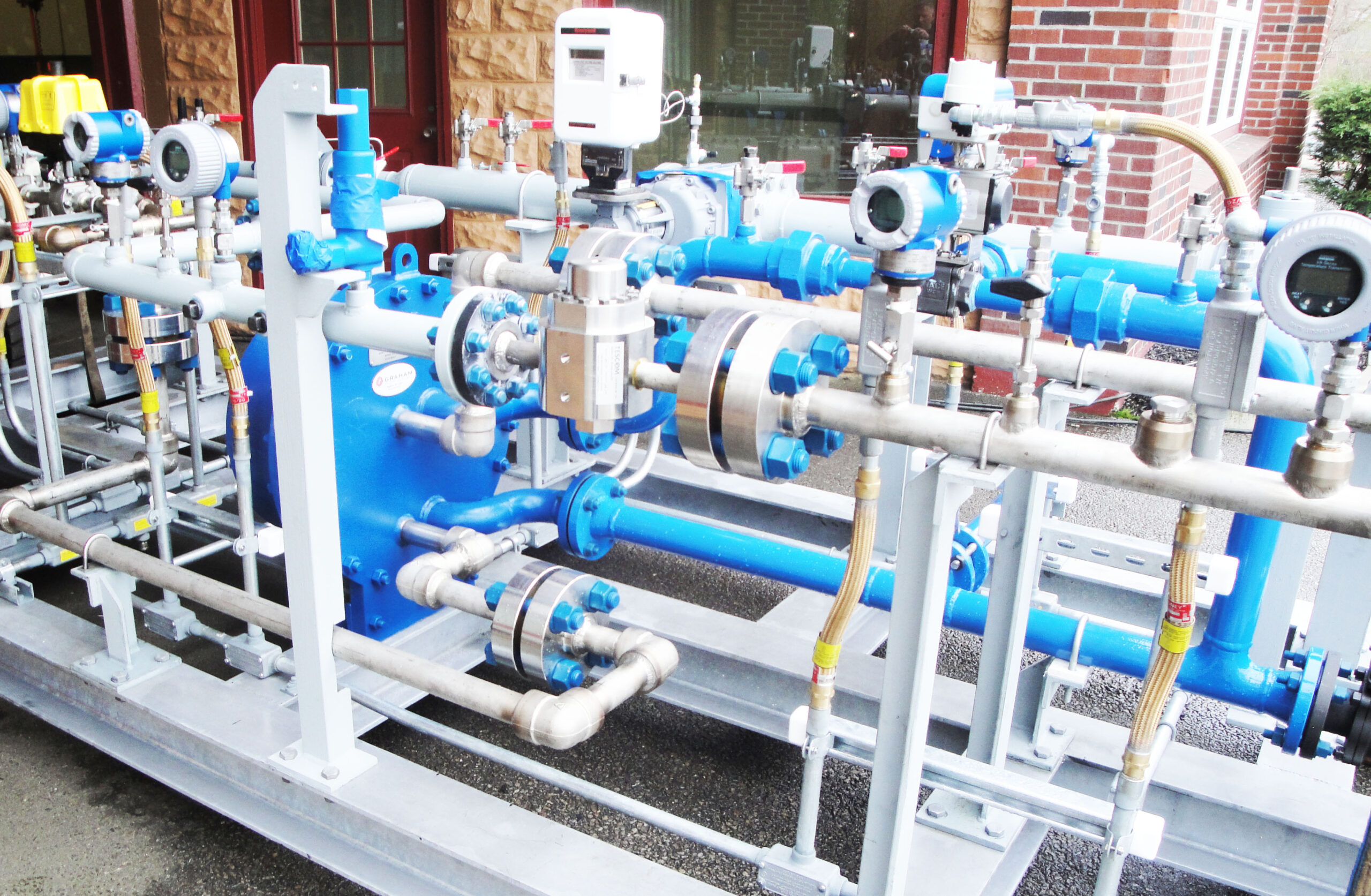
Faster project delivery. Prefabricated spools and modular skids are built in controlled shop conditions, then installed on site. That approach improves weld quality, shortens field time, and limits disruption to occupied facilities. It is a central part of our prefabrication capability.
Maintenance and Longevity
Piping systems reward attention and punish neglect. A practical maintenance program usually includes scheduled inspections of joints, valves, supports, and insulation, since these are the points where problems appear first. Visual signs such as staining, corrosion, deformation, or sagging pipe are early warnings worth acting on.
Flushing and cleaning keep sediment and mineral buildup from restricting flow and forcing pumps to work harder. Cleaning intervals depend on the fluid, water quality, and how hard the system runs, so they should be set facility by facility rather than by a generic calendar.
Valve exercise, pressure monitoring, and updated documentation matter just as much. Knowing where isolation points are and confirming they still operate is often the difference between a two hour repair and a full day of lost production. Facilities that pair scheduled service with 24/7 emergency coverage recover faster when something does go wrong, which is how our mechanical service and maintenance programs are structured.
Where Utility Piping Is Heading
Several practical shifts are changing how facilities plan piping work. Sensors and monitoring tied into building and industrial control systems give operators earlier warning of pressure and temperature problems, supporting planned repairs instead of emergency calls. Energy codes and decarbonization goals are pushing facilities toward heat recovery, higher efficiency boilers and chillers, and better system controls. Modular fabrication continues to move work off the job site and into the shop, where quality is easier to control. Digital documentation makes it far easier to service a system a decade after installation.
None of this replaces fundamentals. Correct material selection, qualified welding, proper support, and disciplined maintenance still determine whether a system performs.
Working With Fraser Engineering Co. Inc.
Fraser Engineering Co. Inc. has served Massachusetts and New England since 1950. We are a third generation, women owned mechanical contractor recognized by the Commonwealth of Massachusetts as a Woman Business Enterprise, and our licensed workforce includes plumbers, pipefitters, welders, HVAC technicians, electricians, and burner technicians.
That combination matters on piping projects. HVAC, piping, controls, prefabrication, and maintenance sit under one roof, so facilities work with one partner instead of coordinating several trades. Our team holds Massachusetts and Rhode Island trade licenses, performs ASME certified work, and responds 24 hours a day, 365 days a year.
To discuss a process or utility piping project, call 617-332-3700 or contact our team.
Frequently Asked Questions
What is the difference between process piping and utility piping?
Utility piping carries supporting services such as natural gas, water, steam, and compressed air. Process piping carries materials directly involved in production, such as chemicals and fuels. Most industrial facilities have both, and they are commonly designed and installed together.
How do I know which piping material is right for my facility?
It depends on the fluid or gas being moved, operating pressure and temperature, corrosion exposure, applicable code, and how the system will be maintained. A site assessment is the fastest way to narrow the options before design begins.
How long do industrial piping systems last?
Service life varies widely by material, operating conditions, and maintenance. Systems that are correctly specified, properly supported, and inspected on schedule routinely outlast systems that were installed cheaply and left alone.
Does piping work require certified welders?
For pressure piping and gas or petroleum service, yes. Fraser Engineering Co. Inc. uses welders certified to ASME IX and API 1104.
Can piping be installed without shutting down my facility?
Often it can. Phased tie ins, temporary isolation, and prefabricated assemblies built ahead of time shorten the window when systems must be offline. Shutdown planning is part of the project scope discussion.
How often should utility piping be inspected?
Most facilities benefit from scheduled inspections at set intervals, with more frequent checks on high pressure, high temperature, and chemical service lines. The right frequency depends on the system and how hard it runs.
What does prefabrication actually save?
Shop built spools and skids improve weld quality, reduce field labor hours, and limit how long crews work inside an occupied facility. On tight schedules, that often decides whether a project finishes on time.
Do you offer emergency service for piping failures?
Yes. Fraser Engineering Co. Inc. provides 24/7 emergency response across our licensed trades, 365 days a year.
What areas does Fraser Engineering Co. Inc. serve?
We are based at 839 Upper Union Street in Franklin, Massachusetts, and serve facilities throughout Massachusetts and New England, including Greater Boston and surrounding communities.