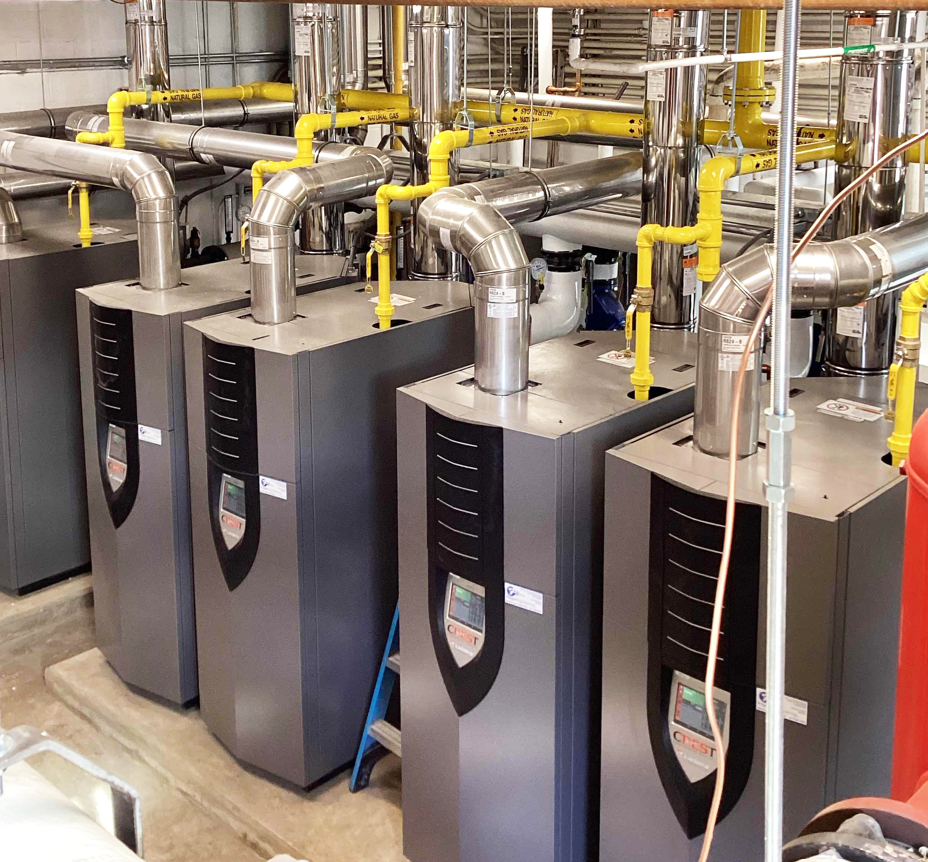
Choosing between maintaining your current HVAC system and investing in a new one is not always straightforward. Keeping an older unit running may seem cheaper, while upgrading promises lower energy bills. The right choice depends on your equipment’s age, breakdown frequency, and your goals for comfort and cost. This article compares preventative maintenance with new HVAC equipment to help you decide which approach delivers the best efficiency and fewest repairs.
A preventative HVAC maintenance plan focuses on regularly servicing existing equipment to optimize performance, extend lifespan, and reduce breakdowns, often at meaningful savings. New HVAC equipment carries a higher upfront cost but delivers the latest technology, lower operating expenses, and greater reliability. The right choice depends on equipment age, condition, and budget.
Weighing Maintenance vs. Replacement
The age, repair history, and efficiency of your HVAC system shape the choice between ongoing upkeep and new equipment. A system approaching 15 years old often shows wear maintenance alone cannot resolve, while a well cared for unit can delay a costly replacement for years with expert attention.
Regular preventative maintenance from Fraser Engineering keeps components lubricated, filters clean, and controls calibrated, helping prevent breakdowns. If repairs grow more frequent or costly relative to replacement, it is time to consider upgrading, and Fraser Engineering’s licensed technicians can help determine which option delivers the best value.
| Factor | Favor Maintenance | Favor Replacement |
| System Age | Under 10 years | Over 12 to 15 years |
| Repair Frequency | Occasional minor fixes | Frequent or costly repairs |
| Energy Efficiency | Moderate efficiency loss | Significant inefficiency |
| Comfort Levels | Comfortable heating and cooling | Noticeable inconsistency |
| Technology Advancements | Minimal upgrades needed | Desire for modern features |
Beyond cost, consider risk: older systems can fail unexpectedly, disrupting business operations and occupant comfort. Preventative maintenance reduces this risk by catching problems early, a benefit built into Fraser Engineering’s service plans, which include emergency response. With over 75 years serving Massachusetts and New England, Fraser Engineering also offers a free online project cost estimator for a transparent budget range.
Benefits of Preventative Maintenance
Preventative maintenance is far more than routine checkups. It is a strategic approach that keeps your system running smoothly while catching small problems before they escalate. Consistent seasonal service keeps filters, belts, coils, and lubricants functioning properly, preventing the strain that drives up energy use and shortens equipment life.
Fraser Engineering regularly helps clients avoid emergency breakdowns through scheduled inspections, including cleaning heat exchangers, checking refrigerant levels, and testing electrical connections, reducing the risk of downtime that can mean lost productivity. Properly maintained systems also deliver cleaner indoor air by limiting dust and mold buildup, an important benefit in hospitals, manufacturing plants, and other institutional settings we proudly serve.
Investing in a maintenance plan spreads costs through smaller service fees rather than unpredictable major repairs, and creates room to plan upgrades through regular efficiency audits.
“Routine care saved us nearly $800 in major repairs, a real testament to Fraser Engineering’s commitment,” one satisfied client shared after two years on our maintenance program.
Key Maintenance Tasks
Changing air filters regularly is one of the simplest and most effective steps. Dirty filters restrict airflow and can cut efficiency by up to 15 percent, so replace them every one to three months to keep dust and allergens from circulating.
Cleaning the coils, both evaporator and condenser, is equally critical. Grime buildup acts like insulation, reducing heat transfer and causing the system to consume up to 30 percent more energy. Regular cleaning restores efficiency and reduces strain on compressors and fans.
Thermostat calibration is often overlooked, yet a poorly calibrated unit cycles on and off unnecessarily, wasting energy. Lubricating moving parts such as motors and fans reduces friction and wear, extending system life.
“Preventative maintenance is not just a checklist. It is an investment in peace of mind.”
When combined into a scheduled program managed by skilled technicians such as those at Fraser Engineering, these tasks shift HVAC upkeep from a reactive struggle into a proactive strategy.
Advantages of New HVAC Systems
New HVAC equipment reflects a leap forward in technology and efficiency, reshaping how a building stays comfortable while controlling costs. These systems carry a larger upfront investment, but the resulting savings often recover that cost over time.
Smart thermostats learn a building’s usage patterns and adjust heating or cooling accordingly, reducing energy consumption by 10 to 12 percent. Variable speed motors improve on traditional motors that run at one constant speed, delivering quieter operation and savings of up to 20 percent. Advanced filtration can remove up to 99 percent of airborne particles, improving indoor air quality most notably in hospitals and manufacturing facilities.
| Feature | Benefit | Impact |
| Smart Thermostats | Adaptive temperature control | About 10 to 12% energy savings |
| Variable Speed Motors | Modulated power output | Up to 20% reduced electricity use |
| Advanced Air Filters | Capture over 99% airborne particles | Improved health and indoor air quality |
| Integrated Diagnostics | Early fault detection | Reduced downtime and repair costs |
These innovations reduce utility bills and extend equipment life, which is why many facility managers in the critical sectors Fraser Engineering serves find new installations worthwhile.
Installation Considerations
Installing a new HVAC system starts with understanding your space, since the right fit determines efficiency and comfort. An oversized system cycles too often, while an undersized unit runs constantly and strains its components, which is why Fraser Engineering emphasizes accurate sizing based on detailed load calculations.
Ductwork evaluation is another step many facility managers overlook, yet leaky or aging ducts can quietly reduce efficiency. Our licensed team inspects existing ductwork during installation planning and recommends repairs or sealing where needed. Professional installation matters just as much, since precise work on controls, refrigerant lines, wiring, and gas connections protects your investment and ensures local codes are followed.
“Installation quality directly defines how well your HVAC system performs day after day,” says Marco Barreto, one of our seasoned project managers. “Cutting corners here is not worth it.”
| Key Considerations | Details |
| Correct system sizing | Determined by professional load analysis |
| Thorough ductwork evaluation | Includes possible repair or replacement |
| Qualified professional installation | Attention to detail |
| Comprehensive project coordination | Avoids delays and mismatches |
Recognizing these factors upfront helps balance cost with long term value.
Cost Analysis: Maintenance vs. New Units
Preventative maintenance plans generally carry a low annual fee compared to the higher upfront cost of new equipment, which often tempts facility managers to stick with maintenance. But the comparison does not end there: regular maintenance catches problems such as clogged filters before they escalate, though aging systems eventually reach physical limits new equipment does not share.
| Factor | Maintenance Plan | New Equipment |
| Initial Cost | Low, annual service fee | High, purchase and installation |
| Energy Efficiency | Moderate improvement | Significant improvement |
| Repair Costs | Reduced via routine maintenance | Minimal, covered by warranty |
| Lifespan Extension | Adds years to existing system | New system life of 10 to 15 years |
| Monthly Utility Bills | Slightly lower | Noticeably lower |
A consistent maintenance program can extend a system’s functional life by roughly five years or more, while a new system offers a full lifecycle of 10 to 15 years with proper upkeep. At Fraser Engineering, we have found that combining both approaches works best: maintaining systems during their peak years and planning upgrades before efficiency losses outweigh repair savings. The right decision depends on your facility’s budget, operational criticality, and long term energy goals.
Optimizing HVAC Efficiency
Whether maintaining an older unit or considering a new installation, the goal is the same: keep your HVAC system running as efficiently as possible. Regular service remains essential even for new systems, since annual inspections catch minor issues early.
Sealing leaks in ductwork and the building envelope is one of the most direct ways to improve efficiency, and our licensed technicians use diagnostics such as blower door tests and infrared thermography to pinpoint them. Upgrading insulation offers a similar benefit, particularly in the older buildings common throughout Massachusetts and New England, and smart thermostats add further gains by adjusting temperature automatically when spaces are unoccupied.
“Great people doing great work” is not just a slogan. It is a commitment Fraser Engineering stands by daily, ensuring safety, reliability, and lasting value in every project.
Keep Your HVAC System Efficient and Reliable
Not sure whether your facility needs continued preventative maintenance or a new HVAC system? Fraser Engineering Co. Inc. can evaluate your existing equipment, assess efficiency and repair concerns, and help you determine the right approach for your facility’s needs and budget.
617-332-3700 or contact our team today to discuss your HVAC maintenance or replacement needs.
FAQs
What are the energy efficiency implications of maintaining old HVAC systems versus upgrading to new units?
Older HVAC systems can maintain decent efficiency with regular tune ups, but they typically lag behind modern units built with advanced technology such as variable speed motors and smarter thermostats, which can be up to 40 percent more efficient. The U.S. Department of Energy notes that replacing a unit over 10 years old can cut energy bills by nearly one third.
How does preventative maintenance impact the lifespan and performance of existing HVAC equipment?
Preventative maintenance keeps your HVAC system running smoothly, catching small issues before they escalate, and can extend equipment lifespan by up to 40 percent. Well maintained units operate up to 15 percent more efficiently, lowering both energy use and repair costs.
When is it more advantageous to replace an HVAC system instead of investing in maintenance?
Replacement becomes the better option when your unit is over 10 to 15 years old, consumes 20 to 30 percent more energy than a new model, or has repair costs totaling more than half the price of a new system, since newer systems offer up to 40 percent better efficiency and fewer breakdowns.
How does the cost of ongoing preventative HVAC maintenance compare to the expense of installing new equipment?
Ongoing preventative maintenance typically costs $150 to $300 annually and can reduce costly breakdowns by up to 95 percent. New equipment carries higher upfront costs, generally $5,000 to $12,000 or more, though consistent maintenance can extend existing units by 5 to 10 years.
What factors should be considered when deciding between continuing maintenance or purchasing new HVAC equipment?
Key factors include the system’s age, since units over 10 to 15 years old typically favor replacement, along with repair costs approaching 50 percent of a replacement quote and efficiency losses of up to 30 percent. Breakdown frequency, rising energy bills, and available rebates are also worth weighing.